
The wildlife of Nepal includes its flora and fauna. Many tourists visit Nepal not only to see the Himalayas but also to see wildlife. Nepal has common and protected wildlife. A large variety of animals and plants grows in Nepal’s tropical to arctic climate.
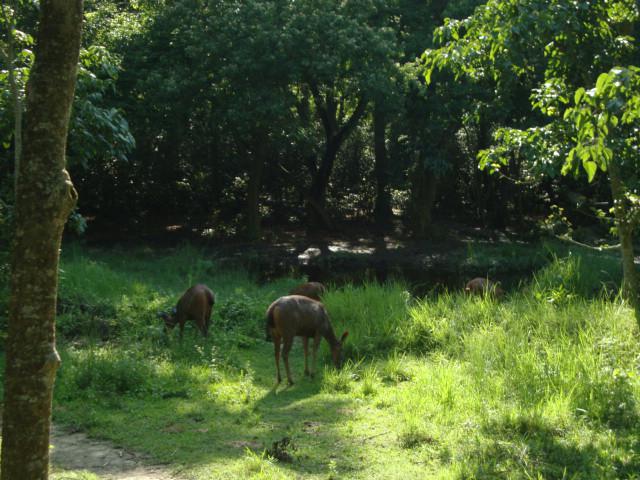
There are 185 species of mammals found across Nepal. The south of Nepal is also known as the Tarai. It has a dense jungle home to animals such as the greater one-horned rhinoceros, the Asian elephant, and the Bengal tiger. In Tarai, the leopard, langur, Rhesus monkey, hyena, jackal, wild boar, antelope, wild cat, wolf, sloth bear, chital (spotted deer), barking deer, Arna (wild water buffalo), swamp deer, and endangered blackbucks are also found.
The Himalayan region is home to endangered snow leopards and pandas. It also found musk deer, blue sheep, Thar (wild goat), pika, marmot, and wild yak at high altitudes.
Dolphins are found in the fresh waters of the Narayani and Karnali Rivers, and snow trout are found in Rara Lake.
Nepal has two indigenous crocodile species. The gharial crocodile, with a long, narrow snout and a unique appearance, and the danger crocodile, with a marsh mugger, eat anything they can catch. Several types of snakes, such as cobras, vipers, kraits, and Indian pythons, are found in the Tarai. Turtles and monitor lizards are also found in southern Nepal.
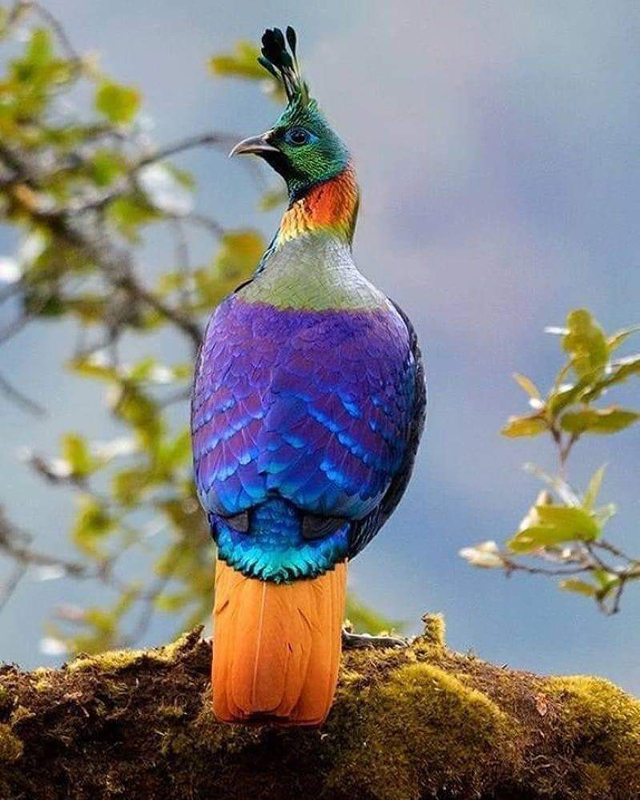
Nepal is also a haven for birds and butterflies. Every year, tourists come to Nepal to see birds and butterflies. Nepal has more than 800 bird species; about half live in the Tarai. The spiny babbler is a unique bird species only found in the middle hilly region of Nepal. The pheasant (the national bird of Nepal) is found at elevations of 2500-4000m above sea level, and the Tibetan duck is found in high-altitude alpine lakes.
Nepal’s national flower is the Rhododendron, which blooms in spring at elevations of 1500 to 3500m. There are 27 varieties of Rhododendrons in Nepal. Juniper and conifer are found in the Nepal Himalayas. Some Himalayan herbals can be used as medicine. Sal trees are primarily found in the Tarai. Sal is a hardwood species that is unusually resistant to rot and insect attacks. The local saying has it that a Sal will grow for a century, fall, and lie there intact for another hundred.
Nepal has several national parks and conservation areas to help maintain the ecosystem.
List of National Parks:
List of Conservation Areas:
List of Wildlife Reserves:
List of Hunting Reserves:
Bardiya and Chitwan National Parks are famous for jungle safaris, which are among the top things to do in Nepal nowadays. These two are Asia’s best National Parks for seeing wildlife.
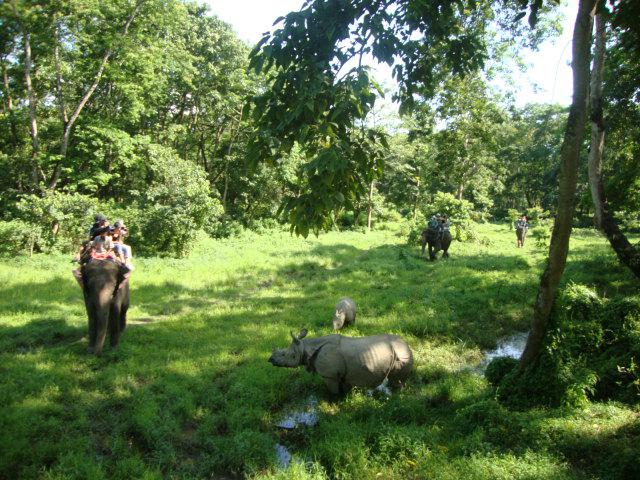
Chitwan Jungle Safari tops the list of things to do in Nepal nowadays. It’s a true wildlife adventure, featuring a Jungle Safari on an Elephant or Jeep, a Canoeing ride, bird-watching, and a jungle walk. It is located in the south-central part of Nepal. Chitwan National Park was established in 1973 and listed as a […]
view details