
Locally, people call the Everest region Khumbu. Mount Everest stands 8,848.86 meters above sea level, making it the tallest mountain on Earth. The English name, “Everest,” was given by Andrew Waugh, a British Surveyor General of India, in honor of his predecessor, Sir George Everest. It has the Nepali name Sagarmatha, the Tibetan name Chomolungma, and the Chinese name Zhumulangma Feng.
Mount Everest belongs to the Mahalangur range in Nepal’s Great Himalayas. GPS data show that since the 1990s, the mountain has moved a few inches northeast and risen slightly each year. Everest Base Camp is Nepal’s most popular trekking spot, attracting mountaineers, climbers, and trekkers from all over the world.
The lower and upper parts of the Everest region in Nepal are famous for trekking and mountaineering. These areas lead into the Sagarmatha National Park, where Mount Everest is located.
Sagarmatha National Park – The home to Mt. Everest:
The Everest region lies within Sagarmatha National Park, which was established in 1976. The park is famous for trekking and mountaineering. It became Nepal’s first national park and a Natural World Heritage Site in 1979. Centered on Mount Everest, this protected area is in eastern Nepal.
The park covers 1,148 square kilometers in the Solukhumbu district. In addition to Mount Everest, it includes other well-known peaks such as Lhotse (8,516 meters), Cho Oyu (8,201 meters), Kangtega (6,782 meters), Kusum Kanguru, Kongde Ri, Baruntse, Taboche, Cho Polu, and Cholatse. There are also many high mountain passes between 5,000 and 6,000 meters, such as Cho La, Renjo La, and Khongma La.
Surrounded by dramatic mountain ranges, glaciers, and impressive peaks, the park is home to rare animals like the red panda, snow leopard, wild goat, musk deer, weasel, Himalayan black bear, langurs, jackals, and the Himalayan mouse. Every year, 152 bird species migrate to Sagarmatha National Park, and 36 of these are breeding species found only in Nepal, adding to the park’s unique wildlife.
How to get there
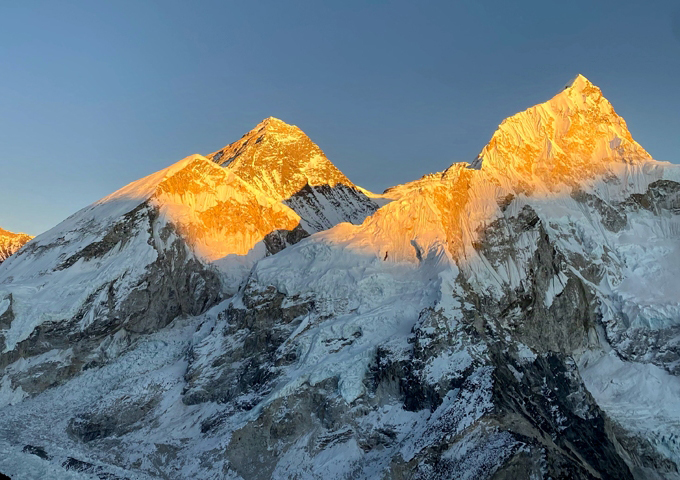
Everest Base Camp Trek is a popular trekking route in Nepal’s Himalayas. Mount Everest (8,848.86 meters) stands in Sagarmatha National Park, a Natural World Heritage Site. The trek offers Sherpa culture and iconic mountain views. Sherpas are the main ethnic group who migrated to the Everest region from eastern Tibet 600 years ago. In Tibetan, “sher” […]
view details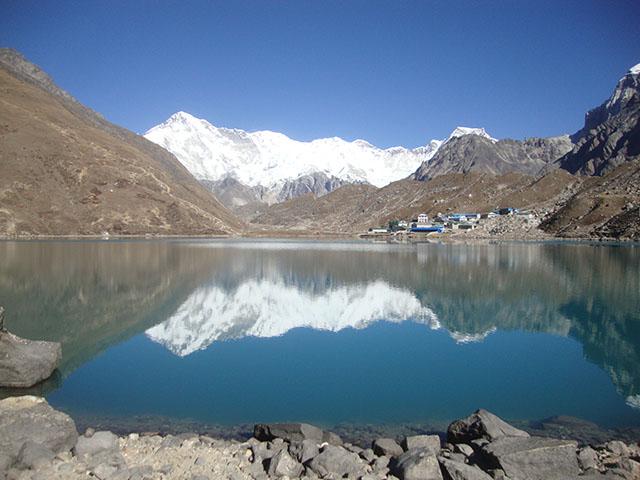
The Gokyo Lake Trek passes through Sagarmatha National Park in the Everest region, offering dramatic mountain views throughout the route. It typically takes 12 to 14 days and leads from the turquoise Gokyo Lakes to Gokyo Ri (5,357 meters). Then to the Ngozumpa Glacier, where sweeping views of the surrounding peaks. The best trekking periods are […]
view details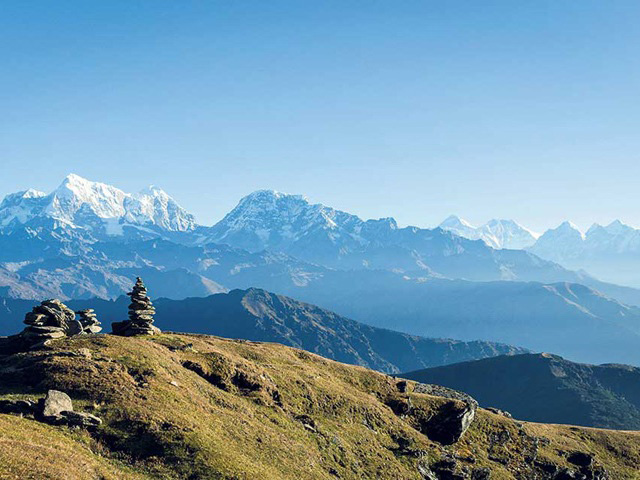
Pikey Peak Cultural Trek offers a moderate, lodge-based trail in a peaceful area. From Pikey Peak (4,067 meters), sunrise and sunset over the Himalayas are the main attractions. You can see Mount Everest, Kanchenjunga, Makalu, Ama Dablam, and the deep valleys to the south. Sir Edmund Hillary once said that his favourite view of Mount […]
view details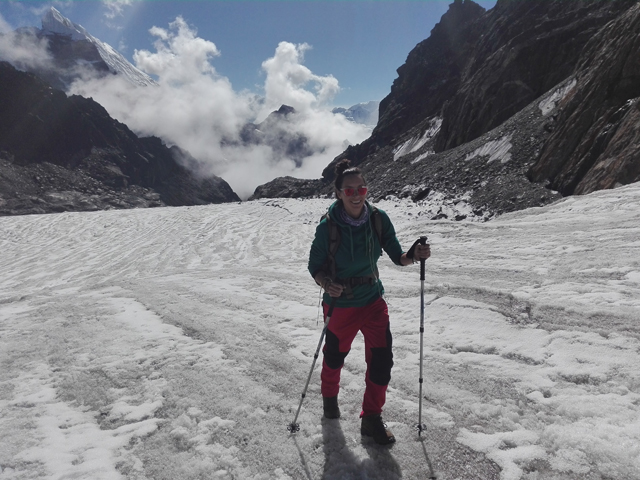
Cho La Pass Trek connects with Everest Base Camp in Nepal’s Everest region. You’ll start in Lukla, acclimatize, and walk through Sherpa villages. Explore the Everest Base Camp, Gokyo Valley and Lakes, and climb Gokyo Ri and Kala Pattar Viewpoints. Cross Cho La Pass, enter the Gokyo Valley by way of the Ngozumpa Glacier, and […]
view details
Three High Passes Trek is a demanding route in Nepal’s Everest region. Long daily hikes at high altitudes are the main challenge, and the three mountain passes above 5,000 meters make it even more demanding, requiring thorough preparation. The trek forms a circuit through remote valleys and high passes, shaped by glaciers and rugged terrain. […]
view details