
The Kanchenjunga region offers varied wildlife, beautiful landscapes, and a strong cultural heritage. As a remote trekking destination, it features multi-day routes, with the main North and South Base Camp treks lasting 24 days. These routes require special permits, so secure the required documentation in advance to avoid delays. Treks suit those in excellent physical condition with prior experience in high-altitude, multi-day trekking. Prepare for strenuous hiking, significant elevation changes, and altitude acclimatisation.
Mount Kanchenjunga, standing at 8,586 meters, is Nepal’s second-highest mountain and the world’s third-highest. It is protected within the Kanchenjunga Conservation Area. In April 1997, the Government of Nepal designated the Kanchenjunga region a gift to the Earth as part of WWF’s Living Planet Campaign.
The main treks in the Kanchenjunga region are the North and South Base Camp routes. The North Base Camp Trek offers close-up views of Kanchenjunga’s north face, with glaciers and higher altitudes. In comparison, the South Base Camp Trek is shorter and less strenuous, with forests, valleys, and Limbu and Rai villages.
Hire a licensed guide for safety, and consider a porter for comfort. You can arrange both through our trekking agencies in Kathmandu and book in advance to secure qualified staff.
How to reach Nepal’s Kanchenjunga region trailhead:
1) Fly from Kathmandu to Suketar (Taplejung) Airport. This is the fastest and most direct option, though flights are sometimes cancelled due to weather. Plan accordingly.
2) Fly from Kathmandu to Badrapur, then take a bus to Taplejung. This route offers a balance of speed, reliability, and scenic travel through hills and tea gardens.
3) Take a night bus from Kathmandu to Taplejung via Ilam. This is the most economical option but also the slowest and least comfortable due to long travel times on winding roads. It offers an in-depth view of Nepal’s countryside and is recommended for experienced long-distance bus travellers.
Accommodation and food in the Kanchenjunga region are more basic than on other treks. Lodges and teahouses offer simple rooms with shared facilities. Meals usually include dal bhat (rice and lentils), noodles, potatoes, soups, and local vegetables. Breakfast options include porridge, muesli, pancakes, eggs, or Tibetan bread. At higher elevations, menus become more limited, so we recommend bringing high-energy snacks.
The Kanchenjunga Conservation Area is home to rare animals such as the snow leopard, red panda, and musk deer. While snow leopards and red pandas are rarely seen, you may come across musk deer and Himalayan thar. Birdwatchers can also spot Himalayan pheasants and other unique birds.
The best trekking seasons are March to May and late September to November, with clear, stable weather and excellent mountain views. These periods also offer the best wildlife sightings, and from late March to May, blooming rhododendrons add vibrant colour. Plan your trip for these times for the best trekking, animal watching, and seasonal flowers.
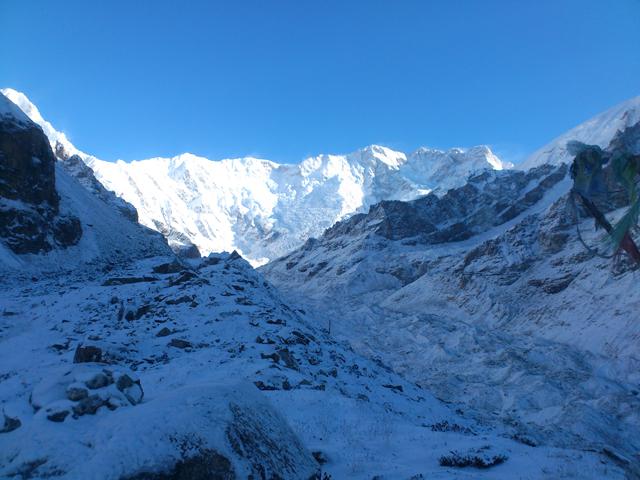
The Kanchenjunga Base Camp Trek offers scenic views in Nepal’s eastern Himalayas. This challenging trek lasts 24 days and covers about 220 kilometres, making it longer than many Himalayan treks. Mount Kanchenjunga, the world’s third-highest peak at 8,586 meters, lies on the border of Nepal, India, and Tibet. It includes five peaks, which are among […]
view details