
What’s changed on the Annapurna Base Camp Trek?
For many years, the trek to Annapurna Base Camp (ABC) has been a special experience for many adventure enthusiasts. The trek itself is like stepping into a living painting. You pass through green rice fields, traditional villages, and deep river valleys, with some of the world’s tallest mountains watching. Having always been a classical trek, it has evolved over time. So what’s changed on the Annapurna Base Camp trek since the last couple of years? At High Camp Trekking, we are excited to explain everything new and improved on this world-famous trekking trail.
If you are planning to make the ABC, it is not the same trek as it was 10 years ago. From the trekking entry point to the places you’ll stay overnight, a new experience awaits you on the Annapurna Base Camp trek.
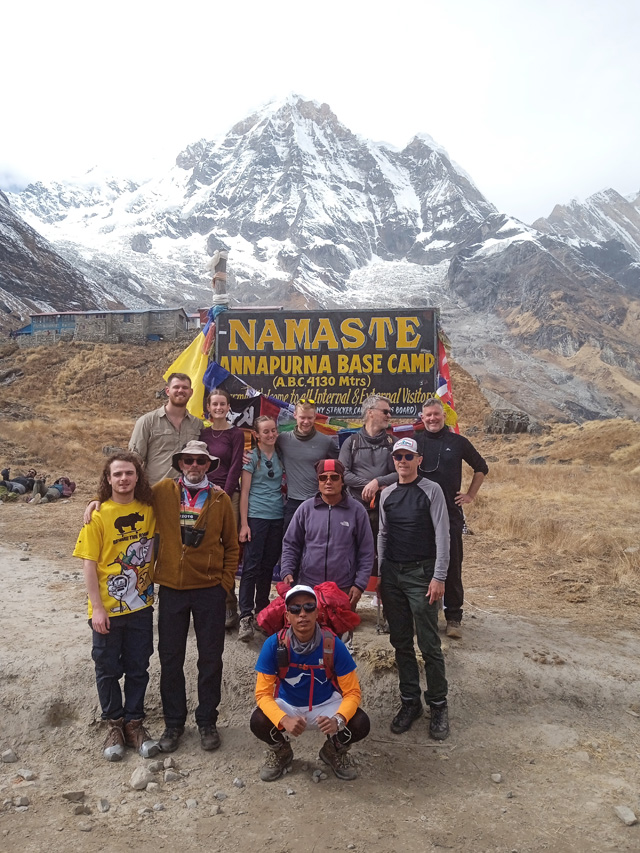
The starting point of the Annapurna Base Camp Trek:
When we talk about what’s changed on the ABC trek, the beginning is already one of the biggest changes. In the past, trekkers would have had to make their way to the city of Pokhara. Then take a bumpy car ride up to a crossroad village called Nayapul, from where the trek officially starts. The bumpy ride was draining for many, even before the trek had started! With road development, the access point to the Annapurna Base Camp trek can be much further inwards. Vehicles can reach farther than before, to places previously accessible only on foot.
While it might sound like the adventure has been taken away, in reality, it has opened new and better options. For those taking the direct route to Annapurna Base Camp, vehicles can reach Ghandruk (1,940 m/6,364 ft). For those choosing the Annapurna Base Camp trek, Poon Hill can be reached by driving straight up to Tikhedhunga (1,480m/4,855ft). This greatly changes your first day, as you have no time to rest after the drive. You can’t ease into the trekking rhythm without suffering cramps from the bumpy ride, followed by a short, direct trek. Now your first day will feel more relaxed and not rushed!
Here at High Camp Trekking, we see these new roads not as shortcuts, but as a better way to skip the dusty parts of the trail. Although we are using vehicles to skip the initial parts, you will save energy, and your trek will start in a more natural setting, providing an overall better experience! This smarter way of using new access points means you’ll spend less time in dust-covered trails and save your energy for the nature trails you came to see, making your trek that much more enjoyable from day one.
New trails and quieter routes on the Annapurna Base Camp Trek:
Those familiar with the ABC trails. They can get well-trodden during the peak seasons. It is one of the most popular treks for international and local Nepalese adventurers. The trails can feel busy and, yes, even overcrowded. Now things have changed! New trails and quieter routes on the Annapurna Base Camp trek have been discovered. Giving you a more peaceful trekking experience while still heading to your destination, Annapurna Base Camp.
By promoting these newer alternative trails, High Camp Trekking hopes to guide more trekkers onto them. Imagine trekking along these beautiful, natural paths. Listen to your footsteps, singing birds, and the rustling of the tree leaves as you take each step forward. These alternate trails still run parallel to the main trails. They still give the feeling of an off-the-beaten-path adventure in a more secluded section of the trek. Still connecting to the villages along the ABC trail, but more peaceful and private.
As an example, if you take the Poon Hill route to Annapurna Base Camp. A new trail branches off from Tadapani. Leading you into a sea of red and pink rhododendron trees. The trail ultimately leads back onto the main trail. But you will have missed a great part of it. Allowing you to enjoy the area without the hassle of overcrowding and commercialisation. Another new trail leads you to the famous Gurung village of Ghandruk. This offers a completely new perspective on the village. As its terraced rice fields and the Annapurna Himalayas come into view.
We keep mentioning over-crowded trails. But do you know the main purpose of these new and alternative trails to Annapurna Base Camp? It is to give you a more intimate experience with nature and the surrounding landscapes! With more opportunities to see local, unique wildlife. Or meeting locals as they go about their daily lives. But most importantly, feeling a deeper connection to the mountains and forests without distractions!
We carefully plan quieter routes to Annapurna Base Camp. This depends on the season, weather, and crowds. This way, we can ensure a safe and memorable trek for you. It’s a unique experience and a secret version of a very famous and sought-after trek!
You are more likely to see wildlife and meet local farmers as they go about their day. Or have the space to truly absorb the majesty of the mountains without distraction. We carefully choose these routes based on the season and the conditions. This ensures their safety and adds tremendous value to your adventure. It is our way of giving you a unique experience, a secret version of a very famous trek.
What’s new with the tea- or guesthouses on the ABC trek?
Trekking through nature or seeing those picturesque views of valleys and mountains. They are just parts of your trekking experience! For most, it’s the unique feeling of spending the night at a mountain lodge deep in the mountains. More commonly known as tea or guesthouses. These simple but charming lodges are run by local families. For years, these lodges were very basic. A simple shared room, a public bathroom. There will also be a common dining hall heated by a single stove. This rustic charm is still part of the experience. Changes are being made in lodges along the entire Annapurna Base Camp trail.
The lodges you will be staying in during the Annapurna Base Camp trek are not the same as those ten years ago! With significant upgrades to comfort and facilities, especially at lower elevations, you’ll find most lodges have invested in these upgrades, making your stay more comfortable. Most lodges now offer private rooms with a western-style toilet and, most amazingly, provide hot-water showers instead of the traditional hot-water bucket, which had to be purchased at an extra cost. Fitted with solar panels or gas-heated boilers, you can now relax and rinse off the dust and sweat after a long day of trekking. A true luxury if you are in the mountains!
Furthermore, the common areas have been updated. Dining rooms are bigger, creating more space, and better insulated to keep them warm on cold evenings. Menus now offer a wide range of dishes, including Western-style foods such as pasta, pizza, and yes, even burgers! The traditional dishes, such as lentil soup and steamed rice, remain favourites for most, but having the extra option is great in itself. Most importantly, there has been a significant improvement in food safety and hygiene. Those with experience of trekking in Nepal know that non-veg dishes were often questionable…
Now, with UV (ultraviolet) water purification and refrigeration, you can safely refill your water bottles without purchasing plastic bottles that litter the trail or end up in landfills. This is a great improvement to trekkers’ health and, of course, to the environment!
Our High Camp Trekking team, with many years of experience in the area, has maintained strong relationships with the families running these lodges, especially those who choose to improve their facilities. When we organise your trek, we will select lodges along the trail that have made these improvements, providing you with an even better overall experience during your Annapurna Base Camp trek.
Small things that still make a great difference in your experience:
Beyond the larger changes to the trekking trails and tea- or guesthouses, there are many smaller improvements that, together, create a much smoother and more enjoyable trek! Connectivity is one of them.
The dream of being completely disconnected is still possible if you wish, but for those who want to check in with family or share a photo/video, it is now much easier. Mobile data networks have expanded, and many lodges now offer Wi-Fi for a small fee (prices can vary with elevation). While the connection might be slow, it’s a lifeline that simply didn’t exist before! Another important upgrade is in the availability of charging points for your electronic devices. With the wider use of solar power and hydroelectric systems, many lodges have power sockets in the dining hall!
The trail to Annapurna Base Camp has seen extensive maintenance and improvements. After the devastating 2015 earthquake, many sections of the trail were rebuilt and reinforced. New stone steps have been laid in steep sections, and bridges have been strengthened. This makes the trek safer and helps prevent erosion, protecting the beautiful landscape for future generations to enjoy!
Choosing High Camp Trekking for these newer experiences to Annapurna Base Camp:
With all these changes and new trails, having an experienced, knowledgeable trekking guide is crucial! This is where choosing High Camp Trekking to organise your trek gives you an advantage. A trekking map can show you the old, traditional trails, but it can’t show you where the newer, quieter trails are; only local guides can. A guidebook might list available lodges but won’t mention which ones have hot water or Wi-Fi, or which family serves the best food.
Acting as your navigators through this evolving landscape is where we shine best. Our guides are constantly on the trails and spend the off-season discovering and exploring newer trails. They know which trail is the best, or which path to take after a night of heavy rainfall. We book the most reliable lodge, which provides warmth, healthy food, and comfortable rooms, so you don’t have to worry about whether you’ve booked the right one. You just enjoy the experience, feeling secure that everything is organised by us.
Furthermore, we are committed to responsible trekking! The mountains are our home, and we are passionate about preserving their beauty for future generations to enjoy. We encourage practices such as using water purifiers instead of buying plastic bottles, and we ensure that all our waste is properly managed! By choosing alternative trails, we also help to distribute the benefits of tourism to less-visited areas, economically supporting a wider circle of local communities.
Classic for a reason, the Annapurna Base Camp trek has undergone many changes over the years. It is constantly improving while still preserving the authentic trekking experience. We at High Camp Trekking remain enthusiastic about sharing these changes and are always committed to providing you with the best Annapurna Base Camp experience. The mountains are calling you, and now it’s the perfect time to answer!